Flexible bronchoscopy
A thin, flexible scope passed through the nose or mouth under sedation to inspect the airways, wash out samples and take biopsies (EBLB, TBLB, TBNA).
Airway procedures · Coimbatore
A day-care look inside the airways — to find the cause of a cough, a shadow on a scan or coughing up blood, and to take the samples that give a definite answer.
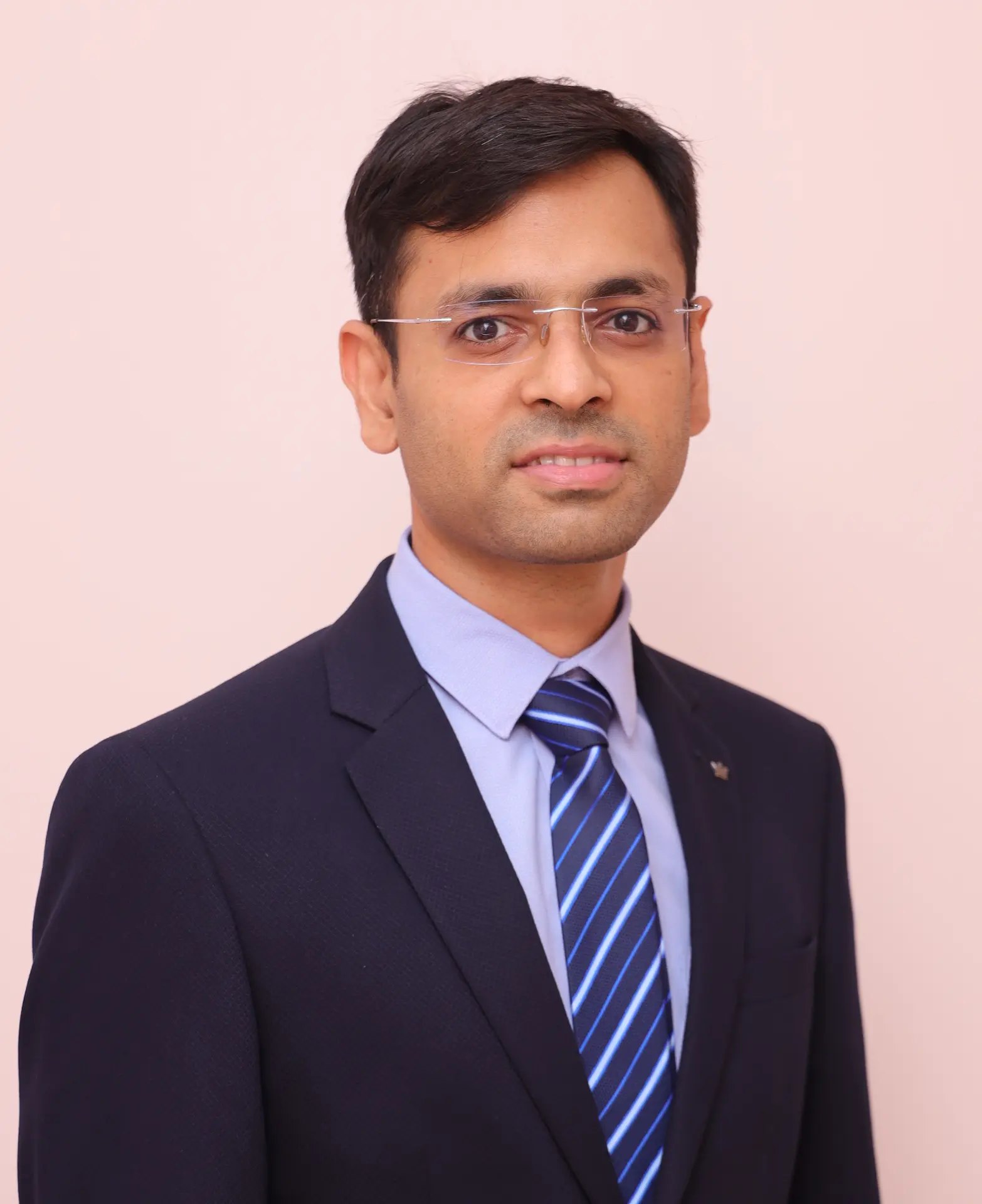
Medically reviewed by Dr. Arun Gangadhar, MBBS, DNB (Pulmonary Medicine), MNAMS, IDCCM, EDARM — Consultant Interventional Pulmonologist & Sleep Physician, Sri Ramakrishna Hospital and Lung Care — The Pulmonary Clinic, Coimbatore.
Overview
Bronchoscopy is an examination of the windpipe and the branching airways with a thin camera. It is both a diagnostic test and, in many situations, the treatment itself.
Bronchoscopy is performed by Dr. Arun Gangadhar, Consultant Interventional Pulmonologist and Sleep Physician at Sri Ramakrishna Hospital, Coimbatore, with follow-up at Lung Care — The Pulmonary Clinic, R.S. Puram.
The decision to do a bronchoscopy is always made after a consultation and a review of your scans. In many patients a scan and a lung function test answer the question and no procedure is needed at all.
Procedures
A thin, flexible scope passed through the nose or mouth under sedation to inspect the airways, wash out samples and take biopsies (EBLB, TBLB, TBNA).
Performed under general anaesthesia for airway procedures that need a wider working channel — bleeding control, tumour debulking and stent placement.
Endobronchial and transbronchial biopsy, brushings and lavage to diagnose infection, tuberculosis, interstitial lung disease and lung cancer.
Airway stenting and cryotherapy for airway narrowing, and bronchoscopic thermal vapour ablation in selected emphysema patients.
Retrieval of inhaled foreign bodies from the airway using flexible or rigid bronchoscopy.
Linear and radial EBUS when lymph nodes or peripheral nodules beyond the airway wall need to be sampled.
For lymph nodes and masses that sit beyond the airway wall, learn about EBUS — ultrasound-guided sampling done during the same bronchoscopy.
What to expect
Fasting, a review of your scans and clotting profile, and a consent discussion about what is being looked for.
Sedation or anaesthesia, airway inspection, then washings and biopsies as needed. Most cases take 20–45 minutes.
Observation for one to two hours, a light meal, then same-day discharge in most cases.
Microbiology and pathology reports usually arrive in two to five days, and the plan is explained at follow-up.
Questions
Usually when a scan shows a shadow, nodule or blocked airway, when a cough or infection is not settling, when there is unexplained coughing up of blood, or when a sample is needed to confirm tuberculosis, an infection, interstitial lung disease or lung cancer.
Come fasting for about six hours, bring previous chest X-rays, CT scans and reports, and tell the team about blood thinners, diabetes medicines and allergies. Arrange for someone to accompany you home.
Flexible bronchoscopy is done with local anaesthetic to the throat and sedation, so it is uncomfortable rather than painful. Rigid bronchoscopy is performed under general anaesthesia.
It is a commonly performed and generally safe procedure. Uncommon risks include sore throat, temporary hoarseness, minor bleeding at the biopsy site, low oxygen during the test, and rarely a collapsed lung after a biopsy. These are discussed with you before consent.
Most patients are observed for one to two hours, take a light meal once the throat numbness wears off, and go home the same day. Normal activity usually resumes the next day.